TOOLS · CONTENT · SYSTEM
Tools, content, infrastructure, automation and investing all call each other. A new project starts on top of what is already here, not from zero.
Research → Think → Create → Act → Self-Improve — each round recorded, reviewed, fed back into the MD constitution.
L1 dialogue builds, L2 view watches, docs govern both sides.
A calm game where breath is the only control — no failure, no score.
Self-built mail wired to Twenty CRM and Newsletter, AI-driven.
Zero-key multi-engine concurrent search aggregator — best engine wins.
Web to desktop to embedded — structure precedes code.
Automation — controllable services plus read-only capability notes · files stay where they are. One self-improving loop: Research → Think → Create → Act → Self-Improve; each round is recorded, reviewed, and fed back into the MD constitution. Self-improvement loop (PDCA + MD constitution): each round feeds the next.
CREATE = you make a thing, not yet distributed — FengMedia 37 projects (2026-10-05, “Under a strong general there are no weak soldiers”), the hub from topic to finished video; FengInvest 91 scripts counts as create too (market research / asset analysis reports).
Docs are the control plane — each iteration rewrites the constitution, the constitution shapes the next loop; AI is the stricter reader, it executes literally.
Controllable services + read-only capability notes · files stay where they are
Two-layer interface principle: L1 builds, L2 views, docs govern — this page (FengOS) is the viewing layer.
Every action runs in conversation: the human drives ZCode / Skill with natural language (Skill); the AI reads docs, calls tools, writes back; the system is the real system, results surface read-only.
Read-only, for checking and showing; this page is the viewing layer (FengOS).
AGENTS rules · MISSION goals · todo ledger · FENGMEM log · Skill packs
C1 · data stays local C2 · outputs into the backup pipeline
Docs are the control plane — AI is the strictest reader, it executes literally.
systems in production: FengInvest · FengMedia · FlyGo · FengMail · pure tools: TTS-UI
This overview speaks for no other page — paradigm, argument, and engineering each live in their own home; what stays here are signposts.
How five layers, two tracks, and two loops compose the operating system of one person leading a fleet — the full 5DT panorama lives on the Feng Human-in-the-Loop page.
The conversation layer does, the viewing layer shows, the document layer governs — the full argument lives on the Ethos page.
Six domains as nodes, cross-domain relationships as edges. Only documented references are drawn; imagined synergy is not. Structure before code, delivery is the goal — from Web to desktop to embedded. From structure to delivery.
Jingxin — a minimal meditation guide app, breathing, mindfulness, guidance, and relaxation in four modes.
Built with Flutter — one codebase that runs on Web / Android / iOS / Windows. A minimal interface that stays focused on meditation itself, undisturbed by feature clutter.
MeditationSession records duration / mode / completion state.BreathingCircle component guides the breathing rhythm.FengOffice — AI-unified mail and CRM, folding the infrastructure of content operations into one automated pipeline.
One CLI manages mail, one Docker stack runs Twenty CRM — mail discovery → reply → CRM record, the whole chain wired up. Newsletters are distributed automatically by the Listmonk system.
Super-Invincible-Search-King — a Playwright-powered all-in-one search tool: images, text, web reading, deep crawling, and anti-bot site scraping.
One machine, eighteen engines. CAPTCHAs are skipped automatically, the engine chain falls back by itself, and a real-human browse mode is the final backstop.
No ambiguous requirements. Break it down until it's measurable and verifiable — that's clarity.
Advancing with PDCA: plan first, then execute in stages, check, and adjust — never jump into writing messy code. Decouple only after the structure is clear. Don't cram everything together.
PDCA drives progress. Break down, research, plan, execute, review — layer by layer.
Decouple only after the structure is clear. Don't cram everything together. Reuse everything reusable — extractable modules, styles, components, and workflows are all made reusable when possible.
The real world isn't a 2D table. Data is a web of relationships, not rows and columns.
I consider user needs, deployment paths, maintenance costs, and how tools fit into real workflows — all together. Product plus operations perspective, debugging and iteration discipline, documentation and handoff awareness — these matter more than the code itself.
I often connect APIs, spreadsheets, local files, and prompt systems, turning scattered manual steps into running workflows.
Open-source first, AI-accelerated. Choose what fits best, not what's flashiest.
Research open-source projects first: If a suitable open-source solution exists, I study how others have done it before deciding. When no open-source project exists, research AI solutions: But AI is an accelerator, not a replacement for structural thinking.
Code isn't the only focus: Whether the functionality is correct, stable, and usable matters more than simply piling up code.
Code is just a byproduct. Documentation, deployment, maintenance, and iteration — that's where delivery begins.
If you want to see specific repositories, code walkthroughs, architecture explanations, or a recruiting-focused technical screening version, I can showcase the most relevant code by scenario: growth tools, internal software, automation tools, or multi-platform builds.
Think it, build it
From technology fundamentals to business scenarios — a systematic study of blockchain, stablecoins, RWA, and decentralized finance
Harness Engineering, AI Agent development, Prompt Engineering, and multi-model collaboration — AI is not just a tool, it's a new way of working
From Docker containerization to Cloudflare deployment — building scalable, high-availability cloud infrastructure
Tools need a business context to create value
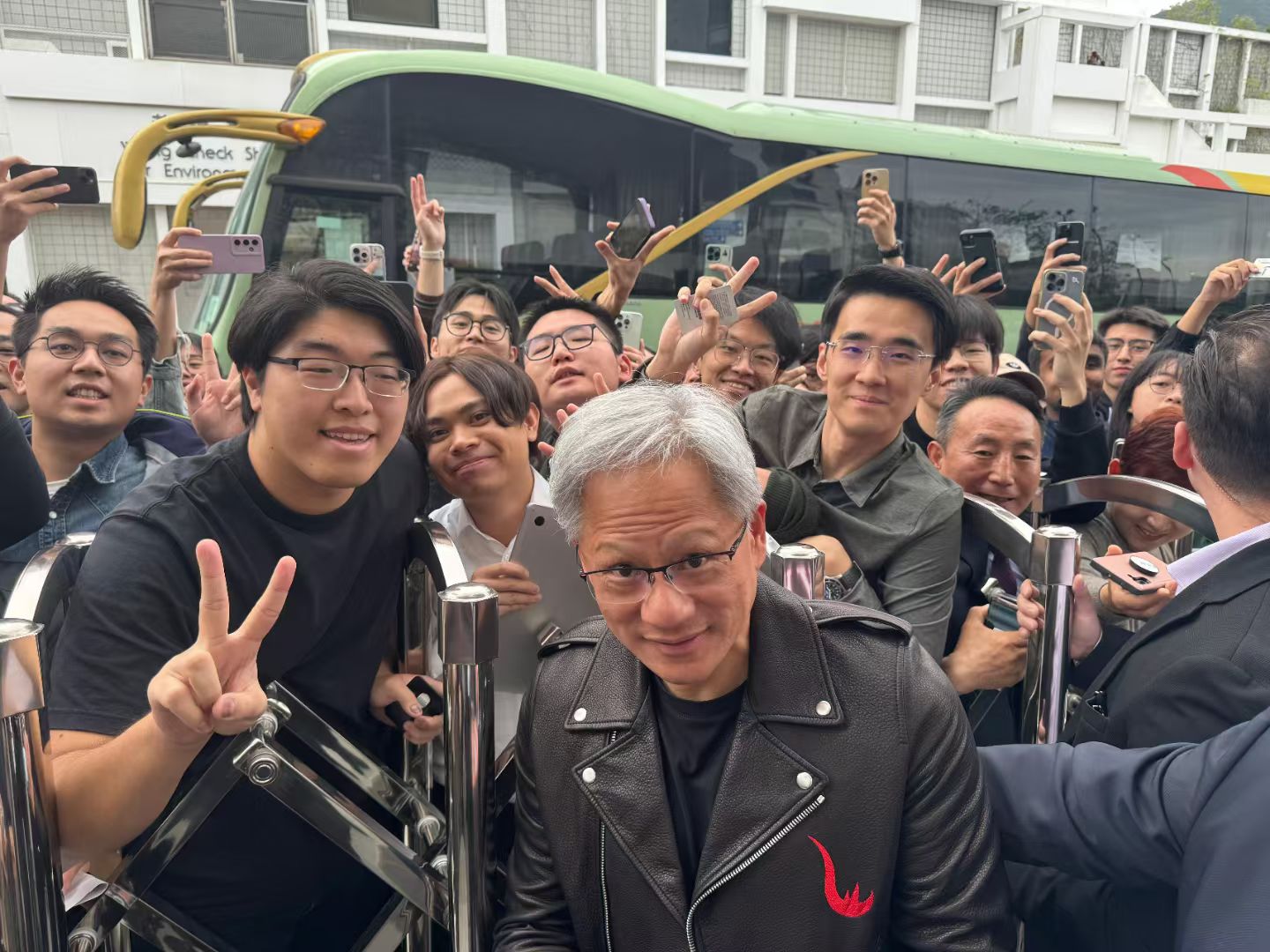
With Jensen Huang at HKUST — I'm behind him.
He stood before me, yet I felt we were no different — just two people on different pages of the same story. He may be the most important person in the world, but his time bank has fewer deposits than mine.